


The True Cost of Retrofitting a Sinewave Filter
Downloads
| REO2026-23-The-True-Cost-of-Retrofitting-a-Sinewave-Filter.docx ( DOCX 242KB) |
| REO2026-23.png ( PNG 1501KB) |
The True Cost of Retrofitting a Sinewave Filter
When specifying sinewave filters for an existing motor installation, purchase price alone can mislead you about the most economical solution.
Sinewave filters can reduce inverter-related voltage stress on motors, particularly where long motor cables are involved. The question for engineers planning a retrofit is not only which filter provides the required electrical performance, but also how and where it can be installed.
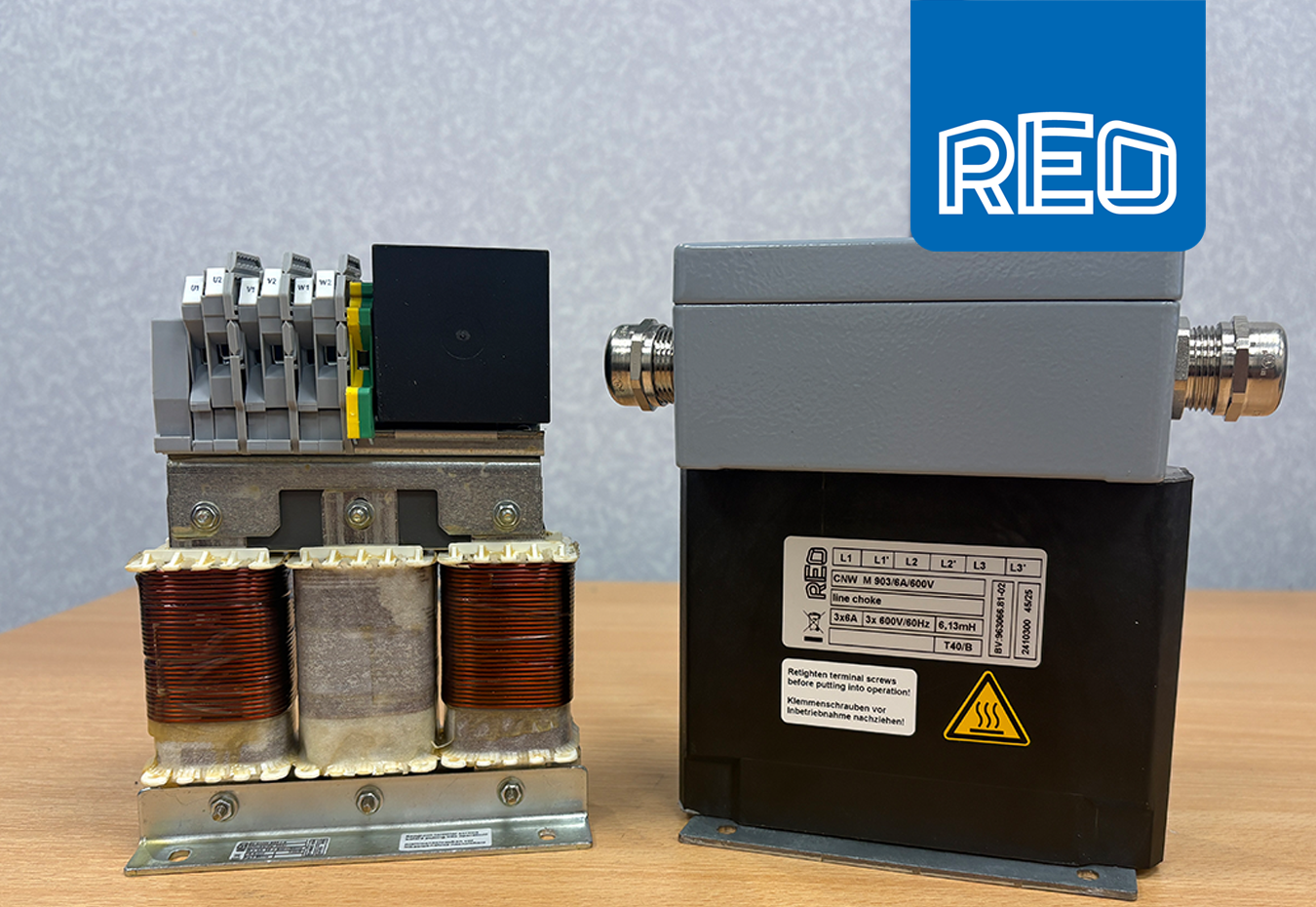
A conventional IP00 sinewave filter can be an economical choice when there is sufficient space and suitable cooling within an existing control cabinet. However, if the cabinet is already full, especially given the requirement for clearance and heat dissipation, the filter may need a separate protective enclosure. That adds enclosure costs, mounting hardware, cable glands, wiring, thermal-management considerations and installation labour. In retrofit applications, these ancillary costs can exceed the difference in the purchase price of the two filters.
The encapsulated REO CNW M 933 sinewave filter is available in high ingress-protection configurations, including an IP65 version, and, subject to installation requirements, it may be mounted without the additional protective cabinet that an IP00 design would require.
The compact construction and straightforward electrical connections can be advantageous where installation space is restricted. IP65 also provides protection against dust ingress and water jets, although suitability for any wash-down regime, chemicals and corrosion must be evaluated separately.
Where suitable cabinet space already exists, an IP00 solution may remain the lowest-cost option. Where a separate enclosure and additional electrical installation are necessary, the IP65 alternative can be commercially attractive despite a higher unit price. In either case, engineers must verify the filter’s electrical rating, thermal clearances, mounting, environmental suitability, connections and the drive manufacturer’s requirements.
The right comparison is the cost of a complete compliant installation—not simply the price of the filter.