


Why choosing the Right Braking Resistor Value Matters
Downloads
| REO2026-2-Standardisation-vs-Customisation-Brake-Resistance-Values.docx ( DOCX 240KB) |
| REO2025-8.jpg ( JPG 71KB) |
Standardisation vs Customisation
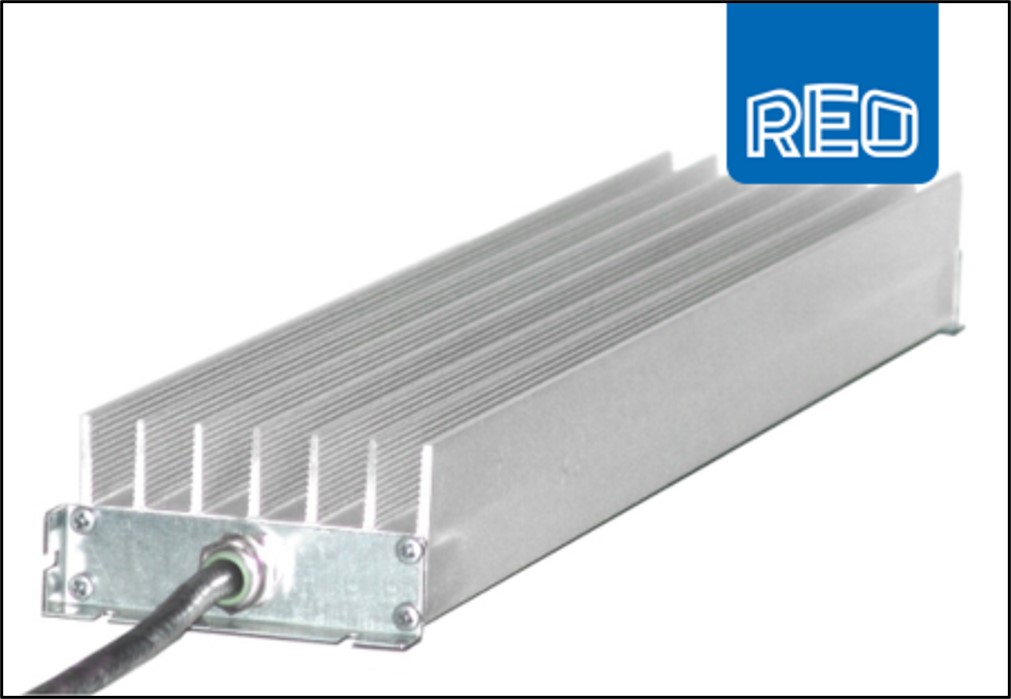
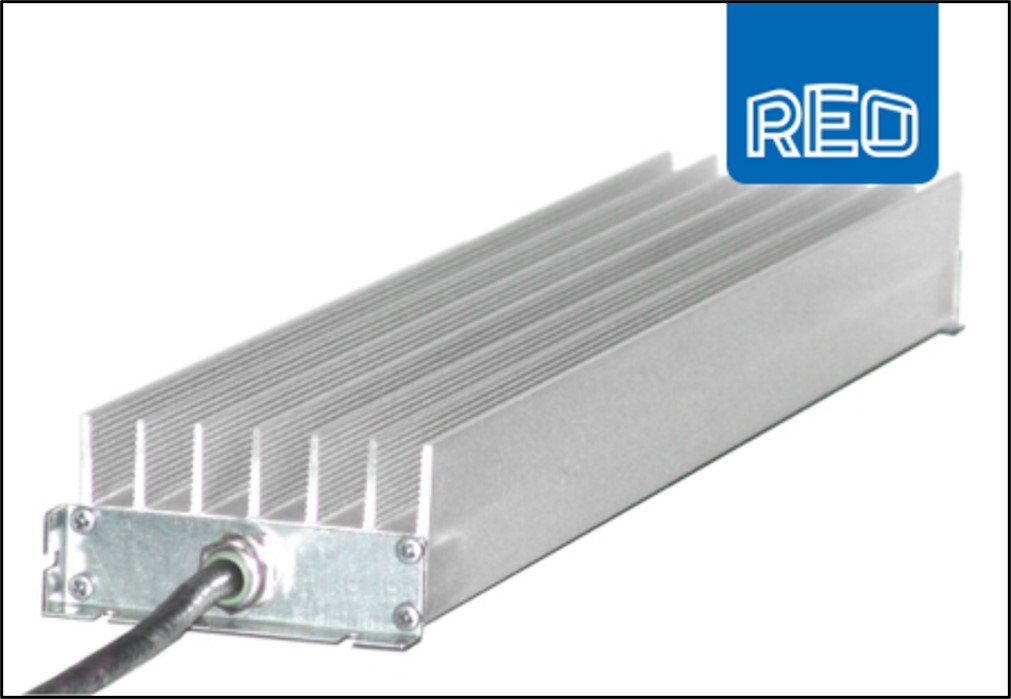
Braking resistors are often treated as simple components in variable-speed drive systems. However, the choice of resistance value can influence engineering complexity, manufacturing efficiency and delivery times. Understanding the preferred resistor value series, E12 can help engineers simplify specifications without compromising performance.
Why resistor choice matters
Braking resistors dissipate regenerated energy during deceleration. When a motor is slowed quickly, it acts as a generator, feeding energy back into the drive’s DC link. If that energy is not safely dissipated, the DC bus voltage rises, and the inverter may trip, to protect itself, due to overvoltage.
Practical example
Imagine a drive with a braking chopper operating at a DC link switching threshold of 700V
A designer calculated that the ideal resistor value would be:
R = V² / P
If the target peak braking power is 1 kW:
R = 700² / 1000
R = 490,000 / 1000
R = 490 ohms – this is not a standard value
However, standard resistor values such as 470 ohms or 560 ohms may be available:
At 470 ohms:
P = V² / R = 700² / 47 ≈ 1.042 kW
At 560 ohms:
P = 700² / 56 ≈ 0.875 kW
In many applications, either value may perform perfectly well within the limits of the drive system and selecting the nearest standard value can therefore simplify specification and improve availability
What is the E12 series?
The E12 series is an internationally recognised preferred number system for resistor values. It reduces the number of unique components that need to be manufactured and stocked while still covering most practical design requirements.
Withing each decade, the E12 series contains twelve preferred values:
10, 12, 15, 18, 22, 27, 33, 39, 47, 56, 68, 82
These repeat by factors of ten across the resistance scale, for example:
1.0, 1.2, 1.5, 1.8 ohms
10, 12, 15, 18 ohms
100, 120, 150, 180 ohms
Because these values are widely used across the electronics industry, they provide a practical balance between precision and manufacturing efficiency.
Why custom values create extra work
When a resistor value falls outside both the defined catalogue range and preferred series such as E12, additional engineering work may be required. This can include creating new part numbers, developing production documentation, verifying electrical and thermal performance and managing separate stock items. While these steps are manageable, they introduce additional engineering effort and can increase lead times.
The link to stock and delivery
Standardisation also supports faster delivery. When manufacturers focus production around commonly used values, it becomes practical to hold stock of popular configurations. For customers, this increases the likelihood of obtaining a braking resistor quickly for new installations or urgent replacements. In time-critical industrial environments, availability can be as important as the precise resistance value.
The real engineering message
The aim is not to discourage bespoke design. Some applications genuinely require a special value, and those cases should always be assessed properly. However, where flexibility exists, selecting a standard resistor value can simplify engineering, reduce lead times and improve overall supply chain efficiency. By choosing standard values wherever practical, engineers can achieve the required braking performance while benefiting from simpler specifications, improved availability; and faster, cheaper delivery.